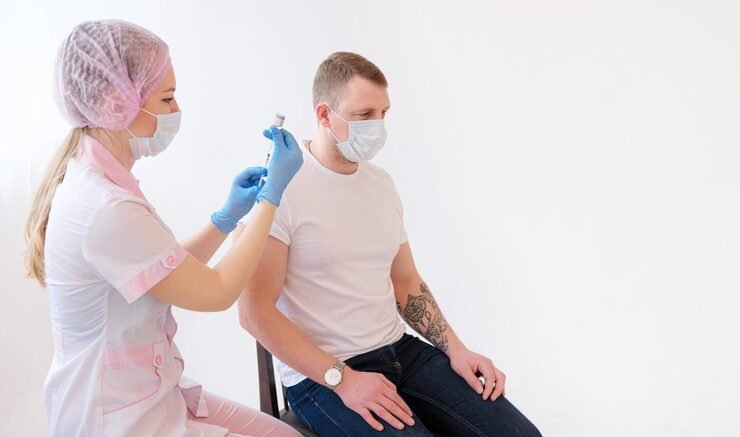
Human Papillomavirus (HPV) is the most common sexually transmitted infection globally. It is so ubiquitous that approximately $80\%$ of sexually active individuals will contract at least one strain of the virus at some point in their lives.
While the majority of HPV infections clear spontaneously without causing symptoms, persistent high-risk strains are directly responsible for several forms of cancer—most notably cervical, anal, penile, vaginal, vulvar, and oropharyngeal (throat) cancers.
Fortunately, medical science has delivered a remarkably safe and highly effective preventative tool: the HPV vaccine (widely administered as Gardasil 9).
Despite its proven track record in virtually eliminating target HPV strains, navigation of vaccination guidelines across different age groups, dosing schedules, and clinical scenarios often leaves parents and adults with questions. Understanding current public health recommendations helps you protect your health or the health of your family.
Why Timing Matters: The Science of Early Immunization
The primary objective of the HPV vaccine is preventative, not curative. It produces a robust neutralizing antibody response that prevents the virus from entering host cells. However, the vaccine cannot treat an existing infection.
[ Ideal Immunization Window ]

              │

              ▼

[ Vaccination Administered at Ages 9–12 ]

(Generates Peak Antibody Titers Prior to Any Potential Viral Exposure)

              │

              ▼

[ Long-Term Immune Memory & Multi-Cancer Protection ]
1. Superior Immune Response in Preteens
Clinical trial data demonstrate that children vaccinated between the ages of 9 and 12 mount a significantly higher neutralizing antibody response than older teens or adults. This enhanced immune memory allows younger individuals to achieve robust, long-term protection with fewer doses.
2. Protection Before Exposure
The human papillomavirus spreads easily through skin-to-skin intimate contact. Administering the vaccine during early adolescence ensures that immune protection is firmly established long before an individual becomes sexually active and encounters the virus for the first time.
Official Guidelines: Age Groups, Dosing Schedules, and Catch-Up Targets
Public health agencies—including the Centers for Disease Control and Prevention (CDC) and the World Health Organization (WHO)—regularly update their guidance based on global real-world effectiveness studies.
Here is the breakdown of current HPV vaccination schedules across different age brackets:
| Age / Target Category | Recommended Dosing Schedule | Clinical Objective & Details |
|---|---|---|
| Routine Vaccination (Ages 9–12) | 2-Dose Series (Dose 2 given 6–12 months after Dose 1). | Primary public health target. Produces maximum antibody titers with 2 doses. |
| Catch-Up Series (Ages 13–26) | 3-Dose Series (Given at 0, 1–2, and 6 months) if started at $\ge 15$. | Recommended for all individuals through age 26 who missed early vaccination. |
| Adults (Ages 27–45) | 3-Dose Series (Based on Shared Clinical Decision-Making). | Not routinely recommended for everyone; best discussed individually with a physician. |
| Immunocompromised Individuals | 3-Dose Series (Regardless of age at initial dose). | Required for individuals with HIV, organ transplants, or autoimmune conditions. |
The Adult Question: Should You Get Vaccinated Between Ages 27 and 45?
Historically, the HPV vaccine was capped at age 26. However, regulatory approvals expanded the indication for adults up to age 45. Public health recommendations for this group rely on Shared Clinical Decision-Making.
[ Evaluating Adult HPV Vaccination (27–45) ]

                       │

┌──────────────────────┴──────────────────────┐

▼                                             ▼

[ Lower Public Health Benefit ]       [ Potential Individual Value ]

• Most adults have already been      • Individuals entering new sexual relationships

  exposed to one or more HPV strains. • Provides protection against unencountered strains

• Vaccine does not clear existing    • Ideal for those with low prior lifetime exposure

  infections.
If you are an adult between 27 and 45 who was not vaccinated earlier, discuss the following factors with your healthcare provider:
- New Sexual Partners: If you are single or re-entering the dating pool, the vaccine can protect against high-risk strains to which you have not yet been exposed.
- Prior Exposure: If you have been in a long-term, mutually monogamous relationship, your likelihood of acquiring a new HPV strain is low, reducing the overall benefit of late vaccination.
Scientific Tips: Safety, Efficacy, and What the Data Shows
Extensive international surveillance monitoring hundreds of millions of administered doses confirms that the HPV vaccine boasts an outstanding safety profile.
[ Scientific Evidence Highlights ]

              │

┌─────────────┼─────────────┐

▼             ▼             ▼

[ 90%+ Cancer Reduction ] [ Exceptional Safety Profile ] [ Long-Term Memory ]

Reduces cervical          Mild, transient local site    No waning immunity observed

precancers & invasive     pain or localized swelling.   over 12+ years of tracking.

lesions by >90%.
1. Real-World Cancer Prevention
Longitudinal studies tracking national vaccination programs in countries like the UK, Australia, and Sweden reveal that real-world vaccination in early adolescence reduces cervical cancer rates by over $85\text{–}90\%$ compared to unvaccinated generations.
2. Common, Mild Side Effects
Like most routine adolescent vaccines, the vast majority of side effects are mild and short-lived:
- Pain, redness, or mild swelling at the injection site.
- Temporary low-grade fever or headache.
- Fainting (Syncope): Because adolescents are prone to fainting after medical procedures, clinicians recommend having patients sit or lie down for 15 minutes post-vaccination.
Healthy Tips: Complementary Strategies for Comprehensive Cancer Prevention
While the HPV vaccine provides a powerful shield against target viral strains, combining immunization with healthy lifestyle practices ensures full spectrum protection:
1. Continue Regular Cervical Screenings
The HPV vaccine covers the high-risk strains responsible for \~90% of cervical cancers (such as strains 16 and 18). However, it does not cover every rare strain.
- Maintain Screenings: Vaccinated women should still follow recommended guidelines for Pap smears and co-testing for HPV DNA starting at age 21 or 25.
2. Practice Barrier Protection
Using condoms during intimate encounters significantly reduces—though does not completely eliminate—the transmission of HPV and other sexually transmitted infections.
3. Avoid Tobacco Products
Smoking impairs the immune system’s localized ability to clear transient HPV infections. Women infected with high-risk HPV who smoke are significantly more likely to develop persistent infections that progress to cervical intraepithelial neoplasia (CIN) and invasive cancer.
Protecting Health Across Generations
The HPV vaccine represents a major advance in modern cancer prevention—offering a safe, simple way to protect against multiple cancers before they can ever take root.
By following recommended timing schedules, completing the necessary doses, and continuing routine medical screenings, you can take proactive control of your long-term health and protect future generations.