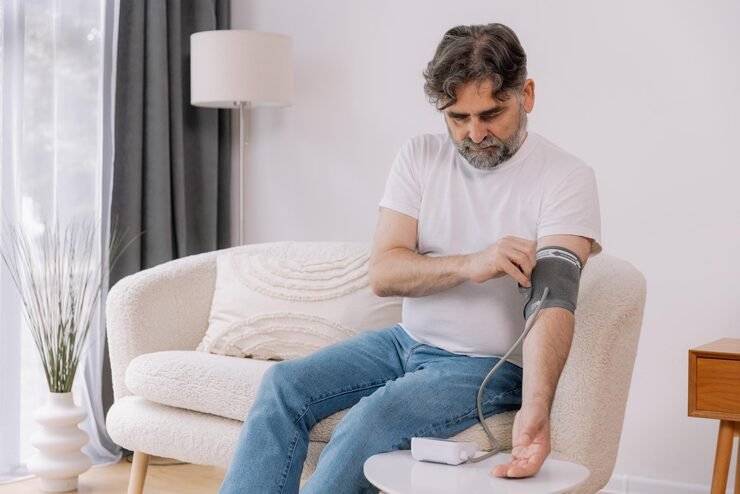
Hypertension defined as a sustained elevation in systemic arterial pressure ($\ge 130/80\text{ mmHg}$ under current American College of Cardiology/American Heart Association guidelines)—affects over 1.2 billion adults globally. Known as the “silent killer,” chronic high blood pressure drives vascular remodeling, accelerates arterial stiffness, and serves as a leading risk factor for stroke, myocardial infarction, renal failure, and heart failure.
While pharmacological therapy (such as ACE inhibitors, ARBs, and calcium channel blockers) remains a standard clinical tool, structured exercise interventions are now recognized as a potent, first-line non-pharmacological treatment capable of reducing blood pressure as effectively as a single antihypertensive medication.
From aerobic conditioning and isometric resistance training to high-intensity bodyweight interval training (HIBIT) and controlled breathing modalities, systematic physical activity directly re-engineers vascular biology, restores endothelial function, and dampens sympathetic nervous system overactivity.
The Vascular Biology: How Movement Lowers Blood Pressure
To understand how physical exercise lowers blood pressure, we must examine the physiological mechanisms governing Total Peripheral Resistance (TPR) and Cardiac Output (CO), which define mean arterial pressure ($\text{MAP} = \text{CO} \times \text{TPR}$).
[ Acute Physical Movement / Exercise ]
│
▼
[ Increased Blood Velocity & Wall Shear Stress ]
│
▼
[ Endothelial Nitric Oxide Synthase (eNOS) Activation ]
│
▼
[ Nitric Oxide (NO) Synthesis ──► Smooth Muscle Relaxation ]
│
▼
[ Reduced Peripheral Vascular Resistance & Lower BP ]
1. Upregulation of Endothelial Nitric Oxide (eNOS)
During exercise, increased blood flow exerts friction against the inner vessel lining—a physical force known as wall shear stress. This mechanical stimulus activates endothelial Nitric Oxide Synthase (eNOS), an enzyme that converts L-arginine into Nitric Oxide (NO).
Nitric oxide diffuses directly into adjacent vascular smooth muscle cells, triggering cyclic guanosine monophosphate (cGMP) signaling that relaxes the blood vessel walls. Regular exercise restores baseline endothelial nitric oxide production, reducing resting arterial constriction.
2. Attenuation of Sympathetic Tone and Baroreceptor Resetting
Essential hypertension is strongly driven by hyperactive sympathetic nervous system output. Chronic physical training:
- Reduces circulating plasma catecholamines (epinephrine and norepinephrine).
- Resets arterial baroreceptors to recognize lower pressure thresholds as “normal.”
- Reduces central sympathetic outflow from the brainstem, causing long-term vasodilation of peripheral arterioles.
3. Structural Vascular Remodeling
Long-term exercise training alters the physical composition of blood vessel walls. It triggers arteriogenesis (the enlargement of existing blood vessels) and increases internal luminal diameter while reducing arterial wall stiffness caused by collagen deposition and advanced glycation end-products (AGEs).
The Modality Matrix: Comparing Exercise Types for Hypertension
Different types of exercise lower blood pressure through distinct physiological pathways. Combining these exercise modalities yields optimal clinical outcomes.
[ The Exercise Modality Matrix ]
│
┌────────────────────────────────────┼────────────────────────────────────┐
▼ ▼ ▼
- Aerobic Training
- Brisk walking, cycling
- Enhances vascular elasticity
- High total energy burn
- Isometric Resistance
- Wall squats, handgrips
- Triggers systemic shear stress
- Rapid reductions in resting SBP
- Interval / HIBIT & Breathing
- Bodyweight intervals (HIBIT)
- Dampens central sympathetic tone
- High compliance in time-poor adults
| Exercise Modality | Example Activities | Primary Physiological Target | Average SBP/DBP Reduction |
|---|---|---|---|
| Aerobic Training | Brisk walking, cycling, swimming, rowing. | Endothelial NO release; sustained post-exercise hypotension (PEH). | $\sim 5\text{–}8\text{ mmHg}$ SBP / $3\text{–}5\text{ mmHg}$ DBP |
| Dynamic Resistance | Weight machines, free weights, resistance bands. | Muscle capillary density expansion; improved glucose uptake. | $\sim 4\text{–}6\text{ mmHg}$ SBP / $3\text{–}4\text{ mmHg}$ DBP |
| Isometric Resistance (IRT) | Wall sits (squats), isometric handgrip holds. | High local pressure reflex followed by rapid systemic shear stress rebound. | $\sim 8\text{–}10\text{ mmHg}$ SBP / $4\text{–}6\text{ mmHg}$ DBP |
| High-Intensity Interval / HIBIT | Bodyweight circuits (jumping jacks, squats, mountain climbers). | Rapid arterial wall stress; inflammation reduction (CRP). | $\sim 8\text{–}13\text{ mmHg}$ SBP / $5\text{–}8\text{ mmHg}$ DBP |
| Diaphragmatic Breathing | Slow, paced breathing ($6\text{ breaths/min}$) with long exhalations. | Vagal nerve activation; immediate sympathetic withdrawal. | $\sim 10\text{–}18\text{ mmHg}$ SBP / $5\text{–}7\text{ mmHg}$ DBP |
Post-Exercise Hypotension (PEH): The Immediate Benefit
One of the most valuable aspects of exercise as an antihypertensive therapy is Post-Exercise Hypotension (PEH).
Immediately following a single 30-minute bout of moderate exercise, blood pressure drops below pre-exercise baseline levels and stays lowered for up to 12 to 24 hours.
[ Acute Exercise Session (30 Mins) ] ──► [ Sustained Peripheral Vasodilation ] ──► [ 12–24 Hour Blood Pressure Reduction ]
PEH occurs because peripheral blood vessels remain dilated even after cardiac output returns to resting rates. This phenomenon proves that exercise acts like a short-acting natural blood pressure medication, making daily movement essential for continuous 24-hour glycemic and blood pressure control.
Scientific Tips: Designing an Antihypertensive Exercise Prescription
To achieve maximum clinical benefits safely, structure your weekly physical activity around evidence-based guidelines (often summarized as the FITT-VP Principle: Frequency, Intensity, Time, Type, Volume, and Progression):
[ The Weekly Antihypertensive Protocol ]
│
┌──────────────────────────────┼──────────────────────────────┐
▼ ▼ ▼
- Aerobic Baseline
- 150+ mins/week moderate
- brisk walking or cycling.
- Isometric Holds
- 4 x 2-minute wall squats
- 3 times per week.
- Slow Breathing Breaks
- 5–10 mins daily paced breathing
- at 6 breaths per minute.
1. Build an Aerobic Foundation
- Frequency: 5 to 7 days per week. Frequency is critical to take advantage of daily Post-Exercise Hypotension.
- Intensity: Moderate intensity ($40\text{–}60\%$ of Heart Rate Reserve, or a pace where you can talk but not sing).
- Duration: 30 to 45 minutes per day (can be accumulated in 10-minute bouts).
2. Integrate Isometric Wall Squats (The Highest Yield Movement)
Recent network meta-analyses show that isometric exercises (holding a muscle contraction without joint movement) produce some of the largest reductions in resting systolic blood pressure:
- The Wall Sit Protocol: Stand with your back against a wall and lower into a partial squat. Hold for 2 minutes, rest for 2 minutes, and repeat for a total of 4 sets. Perform this routine 3 days per week.
3. Add Guided Diaphragmatic Breathing
Clinical trials indicate that combining physical activity with slow, guided breathing exercises ($6\text{ breaths per minute}$) dampens sympathetic nervous system overactivity, yielding significant reductions in resting blood pressure.
Healthy Tips: Safety Precautions and Lifestyle Synergies
While exercise is exceptionally safe for most people with high blood pressure, following proper safety guidelines ensures a smooth, injury-free routine:
1. Avoid the Valsalva Maneuver During Weight Training
When lifting weights, avoid holding your breath while straining (the Valsalva maneuver). Breath-holding spikes intra-thoracic pressure, causing temporary surges in blood pressure. Exhale during the exertion phase (concentric movement) and inhale during the release phase.
2. Warm Up and Cool Down Gradually
Never stop moving abruptly after vigorous exercise. A structured 5-to-10-minute cool-down walk allows peripheral blood vessels to contract gradually, preventing pooling of blood in the lower extremities, sudden lightheadedness, or reflex tachycardia.
3. Synergize Movement with Dietary Sodium Management
Exercise works synergistically with nutritional interventions. Combining regular physical activity with the DASH Diet (Dietary Approaches to Stop Hypertension)—rich in potassium, magnesium, calcium, and low in processed sodium—can lower systolic blood pressure by $15\text{ to }20\text{ mmHg}$, matching or exceeding the effect of dual-drug combination therapy.
Transforming Cardiovascular Health Through Movement
Structured exercise interventions are not merely a supplementary wellness habit; they represent a fundamental biological therapy for high blood pressure.
By combining aerobic conditioning, isometric strength holds, interval training, and slow breathing exercises, individuals with hypertension can actively rebuild vascular elasticity, reduce systemic inflammation, and take control of their long-term cardiovascular health.