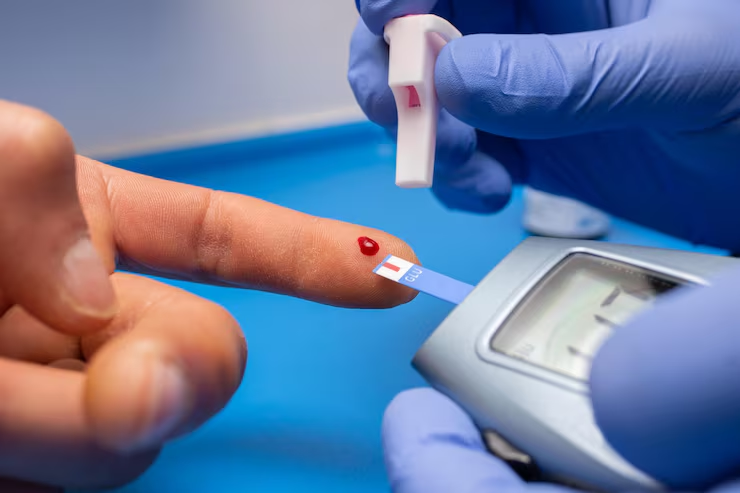
For decades, the gold standard for monitoring type 2 diabetes management was the Hemoglobin A1c (HbA1c) test. Conducted every three to six months in a laboratory setting, the A1c provides a single average number representing blood glucose control over the preceding 90 days.
However, averages can be notoriously misleading. An individual who swings wildly between severe hyper-glycemia (high blood sugar spikes) and dangerous hypo-glycemia (low blood sugar crashes) can register the exact same “ideal” A1c average as someone whose blood sugar remains smooth, stable, and predictably in-range all day long.
Enter Continuous Glucose Monitors (CGMs)—wearable sensor bio-technologies that measure interstitial glucose levels every few minutes.
A landmark clinical trial evaluating wearable technology in adult metabolic health revealed a transformative finding: type 2 diabetes patients who transitioned from traditional finger-stick blood glucose meters to continuous glucose monitoring gained an average of 5 additional hours per day in their healthy target blood sugar range.
Gaining five additional hours of glycemic stability every 24 hours goes far beyond temporary energy fixes—it fundamentally reshapes vascular health, mitigates long-term microvascular complications, and empowers individuals through real-time behavioral biofeedback.
Beyond the A1c: The Shift Toward “Time in Range” (TIR)
To understand why gaining 5 hours of glycemic stability is so impactful, we must look at how clinical diabetology defines Time in Range (TIR):
                    [ The Clinical Glucose Target Spectrum ]
                                       │
     ┌─────────────────────────────────┼─────────────────────────────────┐
     ▼                                 ▼                                 ▼
[ Hypoglycemia Target ]        [ Target Time in Range ]      [ Hyperglycemia Target ]
 Below 70 mg/dL (< 3.9 mmol/L)  70 to 180 mg/dL                 Above 180 mg/dL (> 10.0 mmol/L)
 (Aim for < 4% of total day)    (Aim for > 70% of total day)   (Aim to minimize daily spikes)
1. The Limit of Traditional Finger-Sticks
Traditional blood glucose meters rely on invasive capillary finger-sticks. Because finger-sticks are uncomfortable and discrete, most patients test their blood sugar only 1 to 3 times per day—typically before meals or upon waking.
This approach leaves massive “blind spots” throughout the day. It misses post-meal glucose spikes, overnight drops, and rapid fluctuations driven by stress or physical activity.
2. The Continuous Glucose Advantage
A CGM utilizes a tiny, flexible filament inserted just beneath the skin to measure interstitial fluid glucose 288 times per day. Rather than offering isolated snapshots, the device displays a dynamic glucose trend curve with directional trend arrows on a smartphone or receiver.
By making invisible metabolic responses immediately visible, patients receive instant feedback on how specific foods, physical movements, sleep quality, and stress levels impact their blood sugar in real time.
Comparative Breakdown: Finger-Stick Monitoring vs. Continuous Glucose Monitoring
| Functional Parameter | Conventional Finger-Stick Testing | Continuous Glucose Monitoring (CGM) |
|---|---|---|
| Data Volume | $1\text{–}4$ isolated static measurements per day. | $288+$ automatic continuous readings per day ($24/7$). |
| Metric Focus | Fasting blood glucose & pre-meal baseline snapshot. | Time in Range (TIR), Glucose Variability, & Trend Velocity. |
| Spike Identification | Frequently misses postprandial (post-meal) peaks. | Instantly alerts user to rapid rising or falling glucose trends. |
| Actionable Insight | Reactive: shows blood sugar level after the fact. | Proactive: directional trend arrows allow immediate micro-adjustments. |
| Clinical Outcome | Modest HbA1c improvements; persistent high glucose variability. | Adds $\sim 5\text{ extra hours/day}$ in healthy range ($70\text{–}180\text{ mg/dL}$). |
Behavioral Biofeedback: How CGM Drives a 5-Hour Gain
The extra 5 hours in healthy blood sugar range gained by CGM users does not stem solely from medication adjustments. It is driven primarily by immediate behavioral learning.
When individuals see the direct, real-time consequences of their lifestyle choices displayed on a screen, their daily habits naturally shift across four key areas:
                   [ The Four Drivers of Biofeedback Behavioral Shifts ]
                                             │
      ┌──────────────────────────────────────┼──────────────────────────────────────┐
      ▼                                      ▼                                      ▼
[ Post-Meal Walk Motivation ]         [ Meal Order Optimization ]            [ Unmasking Hidden Sugars ]
 Seeing a rising trend arrow prompts   Learning to eat fiber & protein        Identifying processed foods that
 a 10-minute walk to blunt the spike.  before carbs to flatten curves.       cause unexpected glycemic surges.
1. The Power of the Post-Meal Walk
When a CGM user sees a steep upward arrow 20 minutes after eating, they receive an immediate visual cue. Taking a brief 10-to-15-minute walk engages skeletal muscle contractions that pull glucose directly out of circulation via GLUT4 transporter translocation—without requiring extra pancreatic insulin.
This simple action can blunt an impending blood sugar spike by $30\text{ to }50\text{ mg/dL}$, keeping the user firmly within their target range.
2. Food Order and Carbohydrate Tolerance
Continuous tracking reveals that how you eat food matters almost as much as what you eat. CGM users quickly discover that consuming fiber, healthy fats, and protein before complex carbohydrates significantly slows gastric emptying and flattens the post-meal glucose curve compared to eating refined carbohydrates first on an empty stomach.
3. Eliminating Hidden Spike Triggers
Many foods marketed as “healthy”—such as sweetened yogurt, commercial fruit smoothies, refined oat milk, or low-fat salad dressings—cause severe glucose spikes. Real-time CGM data unmasks these hidden metabolic triggers, empowering users to make informed, healthier food swaps.
Clinical Implications: Protecting Organs from Glycemic Volatility
Gaining 5 additional hours per day in the healthy target blood sugar range delivers profound long-term cardiovascular and neurological protection:
                      [ Reduced Glycemic Volatility ]
                                     │
        ┌────────────────────────────┴────────────────────────────┐
        ▼                                                         ▼
[ Reduced Endothelial Damage ]                     [ Reduced Microvascular Disease ]
 Prevents oxidative stress spikes that             Dramatically lowers 10-year risk of
 erode vascular vessel linings.                     retinopathy, nephropathy, & neuropathy.
- Mitigating Oxidative Stress: Sharp blood sugar surges generate high levels of reactive oxygen species (ROS) in endothelial cells lining arterial walls. By smoothing out these sharp peaks, CGM use reduces systemic vascular inflammation.
- Preserving Microvascular Health: Large-scale epidemiological trials establish that every $10\%$ increase in Time in Range correlates with a $13\%$ reduction in diabetic microvascular complications (including kidney damage, vision loss, and peripheral nerve pain).
Scientific Tips: Maximizing Your CGM Data for Optimal Health
If you are using or considering a Continuous Glucose Monitor to manage type 2 diabetes or optimize metabolic health, follow these evidence-based protocols:
               [ Advanced CGM Optimization Protocol ]
                                  │
       ┌──────────────────────────┼──────────────────────────┐
       ▼                          ▼                          ▼
[ Set Realistic Targets ]   [ Focus on Trend Arrows ]   [ Account for Lag Time ]
 Aim to build up to 70%+   Use directional arrows to    Remember interstitial fluid
 Time in Range over time.  take timely action.          lags capillary blood by 5–10 mins.
1. Focus on Trend Arrows Rather Than Single Numbers
A reading of $130\text{ mg/dL}$ with a flat arrow means your blood sugar is completely stable. The same $130\text{ mg/dL}$ with two arrows pointing straight up indicates your glucose is rising rapidly and will likely overshoot $180\text{ mg/dL}$ within 15 minutes. Use trend arrows to guide timely movement or medication decisions.
2. Understand the Interstitial Lag Time
CGM sensors measure glucose in the fluid surrounding your cells (interstitial fluid), not directly in blood vessels. Because glucose moves from blood capillaries into interstitial space, CGM readings lag capillary finger-stick readings by 5 to 10 minutes. When blood sugar is changing rapidly, keep this brief lag time in mind.
3. Pair CGM Data with Food and Activity Logs
Most modern CGM smartphone applications allow users to log meals, exercise sessions, and stress levels. Reviewing your weekly trend charts alongside your activity log helps you identify consistent personal patterns and fine-tune your routine.
Healthy Tips: Daily Habits for a Stable Glucose Profile
Whether or not you wear a CGM, you can apply the key lessons learned from continuous tracking data to build a resilient, metabolically healthy lifestyle:
1. Build a “Glucose-Friendly” Meal Structure
- Prioritize Fiber and Protein First: Start meals with non-starchy vegetables or a green salad dressed in olive oil, followed by lean protein and healthy fats. Save complex carbohydrates for the end of the meal.
- Avoid Drinking Isolated Sugars: Liquid sugars (sweetened coffees, sodas, fruit juices) enter the bloodstream almost instantly, causing rapid glucose spikes. Choose water, unsweetened herbal teas, or black coffee instead.
2. Leverage Muscle Movement After Meals
Make a habit of engaging in 10 to 15 minutes of light physical activity—such as a brisk walk, gentle cycling, or bodyweight squats—within 30 minutes after finishing your main meals. Light post-meal movement acts as a natural blood sugar buffer.
3. Prioritize Restorative Sleep and Stress Management
Poor sleep and chronic stress elevate cortisol and epinephrine—hormones that signal the liver to release stored glycogen into the bloodstream, raising blood sugar levels even without food intake. Aim for 7 to 8 hours of quality sleep per night and practice daily stress-reduction techniques.
A New Era of Personalized Metabolic Care
The clinical proof that Continuous Glucose Monitors help type 2 diabetes patients spend 5 more hours a day in a healthy blood sugar range marks a major advancement in diabetes care. By transforming blood sugar management from a guessing game into a clear, visual feedback loop, CGMs empower individuals to take control of their metabolic health.
Combining wearable biofeedback technology with nutrient-dense meals, active movement, and healthy daily habits provides a clear path to long-term vitality, steady energy, and cardiovascular protection.